Monday, March 9, 2015

Thomas Malin the Philosopher


Everyday Thomas Malin ate a tuna fish sandwich while he drank a beer. He didn't really care what kind of beer, it just needed to be a beer. This was his 'philosopher's food' as he called it. Thomas wasn't like other people, or at least that is what he told himself. What Thomas definitely was though, was a philosopher. He liked nothing better than to drive down the east coast and find a secluded spot. Then he would pull out his lawn chair and a book and settle in for a good read. After the reading though, was time for tuna and beer.

This habit horrified his brother James. James thought Thomas was eccentric just to get a rise out of people, and maybe he was right to some extent. His family and most of his friends couldn't understand why Thomas acted the way he did. They would ask him questions like "Is there very much money in philosophy?" or "Why don't you become a high school teacher?" These were perfectly asinine questions in Thomas' opinion. How could he blame them though? That is who they were. They thought a lot about money and they taught school or did some other job they hated to make a paycheck. The thing about Thomas Malin though, was that he truly believed he was meant to be a philosopher. He loved Wordsworth and William Blake. He also was very fond of Horace, but he felt like he was missing something since he couldn't read Latin. His brother did his best to remind Thomas that all of this philosophy talk is fine, but it doesn't pay the bills.

"There we go with the money talk again." Thomas would find himself saying. He hated the idea of the forty hour work week. "Who decided that human beings should give up so much of their free time to be miserable anyway"? This was the primary reason that Thomas couldn't hold down a job. He was a good worker and so when he wanted to work he could. He just found he didn't have inspiration to work for more than a month or two before it became time to move on.

Despite being called 'fickle' by his family, he was always consistent with his desire to be a philosopher. It was maddening to everyone around him. They all thought he was the most rude and inconsiderate man they knew. Driving around and setting up shop on some beach somewhere. Then to make it worse they thought; he pretended he was crazy by insisting on his ridiculous tuna fish ritual. Once his brother had even threatened to have him brought in to a mental asylum, but the two men both knew that Thomas was not actually crazy. The problem was that his attitude was driving everyone else crazy. He was rocking the boat.

The thing Thomas knew that the rest of his family didn't was that living to acquire more stuff was a vicious cycle. He knew they would work their lives away and then all they would have left was the remnant of their lives, not the bulk of it. Unfulfilled and sad, they would turn to entertainment and vice to try and find happiness. That wasn't where you found it though. Contentedness comes from your calling. It comes from the work you are destined to do. Yes, Thomas knew philosophy would not pay his bills, but it wrote his mental health check. It kept him sane and happy. How much was that worth? Well, to Thomas it was worth more than a mountain of gold.

That was the reason that every day Thomas would bring his tuna fish and his beer. He would drag a lawn chair and a book and he would hunt for a place in the world where he felt he could reach past the physical chains that tie us to this world and reach a higher plain. He liked to call it a place where heaven and earth kiss. There he was a philosopher. There he was happy and he could learn more than in any other place he could have been. Then when he came back into his real world, he could be a teacher to those whose eyes were open enough to see and whose ears wanted to truly hear. This world has a habit of closing the eyes of its denizens. Making those who have eyes and ears just as blind and deaf as those born without those senses.

Thomas knew that everyone was not meant to be a philosopher, but he also knew that everyone has something they ought to be doing and way too many people will never do it. The price of success is to be ridiculed by those who don't understand, but the price of not trying is a life of never knowing what you could be. 

Should you seek your own place where heaven and earth kiss, be sure it is a higher plain and not a higher plane. I hear those have snakes.

Tuesday, March 3, 2015

The Gates of Rye-Am

The city of Rye-Am is an ancient stronghold. It is built on a set of four hills overlooking the largest bend in the Eljur River. The great walls and stronghold attached to the city were founded by the patriarchs of the city in the days before anyone could even remember. These walls stood in what seemed like the personification of pride. Surely their maker was a man of genius rarely paralleled in his time or any time since. The walls of Rye-Am were supported by four gates, one facing each direction, and these gates symbolized the four pillars of life in the great fortress city.

The Amhurst gate faced to the east, named after the Amhurst family, one of the oldest and most noble families. They became wealthy through inventive farming techniques. Next was the southern gate called the Knights' Gate. This gate symbolized Rye-Am's reliance on the strength of it's own people to defend itself in war. This grew into a tradition of military service that was promoted throughout the ages of the city's existence. Third came the northern gate called the Temple Gate which opened up into the courtyard of the Great Temple. Religion became its own form of bedrock in Rye-Am and its devotees were like the sands of a sea shore. Then finally we come the western gate called The Gate of the Law. This gate is a symbol of Rye-Am's great emphasis on learning. Schools have always played an important role in the city, as has the equally important endeavor of trade because the Rye-Amians believe that commerce and good relations with other people groups bring about the opportunity to learn, both for themselves and those other groups. These four pillars, which the people of Rye-Am call The Four Gates are bred into the thinking of the people in the city. The have the visual reminders of the actual gates themselves, but they also have it taught in the elements of their schools and religious teachings.

The name of the city comes from the Amhurst family itself. Since time immemorial they were farmers and their specialty was rye. Therefore they named the city “Rye” after the grain and “Am” after the first two letters of their last name. The dash in the name came about because of the original Patriarch's son Avin, who really liked dashes. He at one point even suggested his father name the city Rye Dash Am, but his father said that was stupid and no more was spoken of it.


 This is a representation of what the Gate of the Law probably looked like. This gate was purposefully smaller than the other gates. The purpose was to symbolize that knowledge and learning were not flashy like the other pillars, but of equal importance. The two figures above the gate represent two Sphinxes, also called 'The Princes of Light and Goodness'.


Thursday, February 26, 2015

The Life of Meng the Goldfish

Author's Note: This is a story I wrote that may have more fans and critics than any of the other things I created. I think it is necessary to tell you the premise of this story. According to rumor, the goldfish is supposed to have about three seconds of memory before they completely forget everything. With this as the backdrop, the story is about a goldfish named Meng and his perception that his whole life has been exactly like whatever his last three seconds have been.


                                            The Life of Meng The Goldfish

    Meng was a beautiful goldfish. He had lived his whole life in a wonderful aquarium with a castle and a plethora of multicolored rocks. He loved swimming all around and in and out of his castle, but then he got very sick, and then suddenly....he lost his memory.

    Meng was a beautiful goldfish, but he had been sick his whole life. He had a nice aquarium, but fate had dealt him a tragic blow and he could never enjoy all the beauty that surrounded him. He pined away about how he had been born infirm, the next thing he knew he was caught in some sort of net, and then suddenly....

   Meng was a beautiful goldfish, he was also able to fly. He had enjoyed flying his whole life and was amazed at the sights he saw. He knew life was awesome and thought how lucky he was to have been born flying. The only problem Meng had was that he had trouble breathing and there was always this giant following him around. The next thing Meng knew he had landed in some type of porcelain bowl and it was wet! And then suddenly......

    Meng was a beautiful goldfish, he had lived his whole life in a porcelain fish bowl and was immensely happy. He could swim in circles and look out into the beautiful sky and enjoy all that he saw. Oh life was fantastic for Meng until suddenly he heard a loud noise and he found himself caught up in some time of whirlpool and the next thing he knew it was pitch black, and then suddenly...

    Meng was a goldfish, but he was born without eyes, or so he thought. He was a creature of the dark. He knew that he lived in some type of cave with other fearsome creatures too hideous to be seen in the light. Meng was not just a goldfish, but a cave dweller. While he was having this thought however, he suddenly saw a very bright light ahead of him and then the brightness overcame his senses. And then suddenly....


   Meng was a beautiful goldfish, he had lived his whole life in this wonderfully pleasant pond. He always loved swimming with the other fish there and seeing all the animals and plants the pond was blessed with. Life was very awesome for Meng in his pond, and then suddenly...


picture source

Monday, February 23, 2015

She Felt Cold

   Diana Silverton looked down at her watch. It was ten minutes until her appointment with Pastor Wilde. She had walked across Bridgemoor Park on the way to the small church where Pastor Alex Wilde served; growing more anxious every step. It was a particularly hot summer day, one that she felt was an exact paradox to the way she felt. Diana felt cold. She felt emotionless and confused. She had always been a strong believer, but now things had changed. What was wrong with her? Was she sick? Did she lose her faith? Was their a secret sin? She had no clue, but she knew that if anyone could help her, it was Pastor Wilde.

    She approached the doors to the church and opened the one on the right side and stepped inside; shutting the door behind her. The room was bright, but not too bright. Simple, but very nice and clean. There sitting next to the raised platform in a fold-up chair was Pastor Wilde. The first thing Diana noticed was that his silver hair looked matted. He appeared to not have slept in days.

   "Come in Miss Silverton, you are right on time!" he said as he motioned her to approach him. His simple blue jeans and t-shirt surprised Diana as she expected such a well-reputed church father to look the part, but she shrugged it off as more pressing matters were on her mind.

   "Are you all right Brother Wilde you appear sick, or at least overly tired?" Diana asked.

   "No, no! I am fine. Just a little tired is all." the clergy man replied. "Let us not tarry too long my dear, what is it you wanted to see me about?"

   "Well, as you know Brother Wilde, I have been a believer my whole life. My parents raised me in the faith and brought me to church every time the doors opened. I also truly believe Brother Wilde, but..." Diana's voice began to trail off.

   "But what?" Pastor Wilde inquired. "You have made it this far, you may as well tell me the truth."

   "I have served the past five years at the hospital as a nurse and I love it. I have actively served at my church for the past eight years now, but despite all I do, there is something wrong. I find that my heart has grown cold...." her voice began to trail off once more.

   "Come, come! Do not leave an old man in suspense!" the pastor hastily replied.

   "Well..." she began again. "When I help people, be it at the hospital or at the church I have noticed that I do not do it out of love for those I am helping. I do it for the praise and gratitude I get from the people I am helping. I am not interested in any sort of noble reasons or good causes. I am shamelessly seeking my own personal fulfillment. As a matter of fact I get exceptionally hurt and even angry whenever I am not thanked and shown great appreciation for my kindness. Can you imagine that Pastor? Me, a trained nurse and Sunday School teacher, demanding praise!"

   "Have you spoken to your pastor about this Miss Silverton?" Pastor Wilde asked.

   "Oh no Brother Wilde!" She cried in protest. "I am afraid to admit this to people I interact with daily. I will surely be judged by them! I am admitting to you that my heart is cold, it is wicked, and it is idolotrous. You see I was told you are the man who can fix my problems....please help me Pastor Wilde."

   "Listen to my words now, and forget your anxiety. The Spirit of God lives inside of his people. From the smallest to the greatest and he cares for them all. He knows your heart, he knows everyones heart. What you must remember is that all of our hearts are wicked and deceitful and only through God can we overcome the temptations of the flesh. The fact that you realize you seek these accolades instead of doing things for the right reasons means God is working in your spirit. I am quite confident that the realization itself is proof that you are a child of God and he always helps his children when they ask him for it. Have you asked him for help my dear?" the old man asked as he put his hand under her chin and lifted her down-cast face to where he could see her eyes.

   "That is what I am now doing Pastor, I am asking you to help me ask God." Dianna said as she began to cry.

   "No my dear, you have proven by your admission that you are his child and now you must go to Christ himself; he is your advocate." after saying this the pastor removed his hand from her chin and turned away from her taking two steps before turning around. "There is no sin that God can not forgive other than rejection of Jesus Christ and him crucified. If you want your sin and your pain to go away you must ask him to take it away."

   "What if I can't stop?" Dianna asked at last. She finally realized what her real problem was. Why she felt so cold and so nauseated. Why everything felt wrong in her life. She felt she couldn't stop sinning no matter how bad she wanted to. She was worried she was on a never ending roller coaster of mediocrity and she would never be strong enough to break the bonds she was putting on herself.

   "Give it up every day. Ask Christ to take away your sin and your desire to sin every day, and then one day you won't want it anymore. When that pride demon returns in a weak moment one day in the future, return to this confession. This life was never intended to be simple, but rest assured that you are never alone for Christ lives in your spirit.


Saturday, February 21, 2015

The Horse Who Wanted to Be Sneaky

  Max was a horse with a life much like other horses.  He grew up in a barn in the middle of a very large pasture in the heart of New England. What made Max different from other horses was his keen observation skills. Every day he would watch the other animals and try to understand what they were doing. He watched as the chickens scratched the ground, the dogs herded the sheep and the goats ate...well pretty much anything. However, the animals most interesting to Max were the cats. There was a cat that all of the horses called "The Bum" who was fat and aptly named. He did very little except for gorging himself on table scraps. There was also "Speedy" who did not have an off switch. He moved at speeds sometimes even the horses were impressed by. The third cat though, was called "The Snatcher" and he was an excellent hunter. Mice, birds, even a small dog was once pounced upon by the The Snatcher and he made it look easy.

    Every chance he got Max watched The Snatcher on the prowl. He intensely studied the way he crouched his body and slowly and methodically crept along the ground, closer and closer to his target. Max could feel the adrenaline and regularly found himself envious of this ability to sneak up on other animals. One day while he was in the field grazing, Max found himself alone in the field with The Snatcher. He walked up to him like his biggest fan and said "Hello The Snatcher, my name is Max!"

    The cat looked blankly at him for a second and then said "The Snatcher? What is that?"

   "Well that is what you are called!" Max retorted.  "That's what we horses call you!"

   "THAT....is NOT my name!" said the cat "I am  Wilifred the Champion of the Barn Kingdom, servant of the Cat King, Whiskers the Steadfast!

   "Who is the Cat King?" Max asked puzzled.

   "Why he is the large cat who sits near the house and is fed scraps all day long by Mr. and Mrs. Smith, his human servants, who live in the house" Wilifred informed him.

   "Oh...We just call him The Bum" Max replied.

   "What!?!?  Do you know what you have just done? You have committed blasphemy against the Cat King!" Wilifred shouted at the horse.

   "I am sorry, I didn't know" said Max. I just wanted to come talk to you and ask if you would teach me to be sneaky. I see you all the time and am very impressed with your sneakiness."

   "Why thank you!" the cat replied. I would love to teach you but I do not think your large equine body is cut out for the graceful majesty of sneaking.

    After much negotiation, begging, pleading, neighing, crying and promises of naming his first born after him, Max persuaded Wilifred to teach him the art of sneaking. The reader will not have trouble imagining how bad this went as horses are not known for their stealth abilities. It began with terribly awkward attempts at trying to crawl while Max was laying down and ended in something like a full barrel roll down a hill. Wilifred the Champion however, secretly found this experience to be one of the most hilarious he could remember in all of his life.  If one were to ask Wilifred what his favorite moment of the day were he would say it was when Max tried to sneak up on Mrs. Smith while she  fed King Whiskers the Steadfast and Max made such an awful noise and looked so pitiful (and slightly possessed) that she ran into the house screaming about a horse demon!

    When the day was over Max reflected on his utter failure and decided it was of no use to continue his new found practices. Max however, was always creative and decided to use this experience to his benefit and he asked Wilifred to start a rumor on the farm that Max the Horse, had reached enlightenment and was willing to share his wisdom with all of the animals. He promised he could teach them to think like other animals and help them achieve all of their goals more easily. To celebrate his new "enlightenment" he decided to take on a new name as well "The Tumbler". Max had no idea what a tumbler was or what a tumble was,  but Wilifred assured him it was a name fit for a sage.

    By the next summer the reputation of The Tumbler was so widespread tame and wild animals alike  traveled to see the oddly named wise horse in search of enlightenment, while Wilifred sold novelty items he found in the humans' house and created a small fortune at the expense of Mrs. Smith's china collection.

Many scholars feel that the Trojan Horse is a safe bet for "The Sneakiest Horse in History".
 picture source

Friday, February 20, 2015

The Knight and the Bridge Keeper

Author's Notes: This is a fairly old story I wrote about The Way of Saint James, a famous Medieval pilgrimage site.  Also, the end of the story makes mention of Saint Denis, the Patron Saint of France and Saint James, the Patron Saint of Spain.

********************************************************************************
    Ramiro Mendoza sat on the side of the bridge, waiting for the next travelers to past. He worked for the mayor of Burgos and was in charge of collecting tolls from the pilgrims who crossed the Arlanzon river using the bridge on the Way of Saint James. The Way of Saint James was a famous pilgrimage path to Santiago del Compostelo, where according to legend the body of Saint James was buried. Every year millions of pilgrims and noblemen from all across Europe traveled to the city; in fact, other than Jerusalem and Rome, no other site in the western world received as many pilgrims. Burgos was a city in Spain, directly on the way to the pilgrim shrine and Mayor Delgado had every intention of making as much of a profit from this as possible. Most pilgrims had no problem paying the toll, but sometimes it was necessary for Ramiro to show a little muscle and so he had hired five archers from the town to hide in the woodline, ready to pop out on command.


    One spring day Ramiro and his archers were sitting and waiting for the next group of pilgrims when they saw a lone knight riding towards them. As he approached they could tell he was a wealthy man by the quality of his armor, but couldn't see any crest to distinguish who he was.

    "Hello there sir knight!" Ramiro shouted. "Welcome to Burgos, Mayor Delgado sends you his warmest welcome and asks that you, an obviously God-fearing man, help us out by making a small contribution to keeping the bridge in good repair."

    The knight seemed motionless as his horses' tail swished back and forth. Soon Ramiro began to think it was time to call the archers out for his visual encouragement. "Archers!" Ramiro shouted. Then five men at arms came out of the woods with bows and got in position for firing. "Sir knight, let me remind you that while we welcome you, it is impossible to use this bridge without paying"Ramiro called out. Suddenly the knight cracked the reigns of his charger and took off towards the bridge. Before Ramiro could think straight the knight had whipped his sword out and was bearing down on him. As if by second nature he jumped off the bridge into the cold waters of the Arlanzon.

    The archers meanwhile had begun firing, but only a couple of their shots landed and those bounced off his shield and armor. When the knight had crossed the bridge he steered his steed towards the archers, but a second later he reversed and headed on down the road with no intention of actually fighting. The archers realized they had been duped, but it was too late to stop him now. The knight was gone. When Ramiro pulled himself out of the river he decided he needed to improve the bridges defenses in case this sort of thing happened in the future. "Senor Torres, can you find me some rope?" he asked.

   "Yes sir, but what do you intend to do with it?" Torres inquired.

   "Well, we don't want that to happen again, so I thought we could make a tripwire to stop a horse if needed." Ramiro responded.

   "While that would work Captain Mendoza, may I make an alternative suggestion? What if we found a jousting quintain and you could rotate one side and have a sandbag tied to the other? Then when the knight got close enough you could rotate it and knock the horseman off with the sandbag." expained Torres.

   "Yes! Good idea Torres, go and ask the mayor." the Captain commanded.


    About a week past, and the quintain was set up and covered with a large piece of cloth and placed on the bridge. It was a little odd, but not enough for anyone to ask about it. Sometime around dusk Torres shouted from the woodlines "A lone knight is headed this way!" Sure enough the same knight was headed back to France and both he and the men of Borges knew this was not going to be a civil encounter. As he approached Ramiro called out to him.

   "Maybe you have seen a change of fortune since last we met Sir Knight, and you are now ready to pay the toll for your two passes through the lovely town of Burgos." The gray armored knight however was not in the mood to talk and had soon pulled his sword out of the scabbard and was charging towards Ramiro once again. The wily captain was ready this time and pulled the cloth off of the quintain and spun it around knocking the knight to the ground with the sandbag. The archers had ran quickly and made it to the bridge to help Ramiro strip the armor off of the knight and they began to beat him until he submitted.

   "Enough, enough!" The French accent commanded. "I will pay you! Just let me go!"

    "Oh no senor!" Ramiro laughed "I can't wait to show the mayor his new set of French armor!" After they took every scrap of armor off the knight, they put him back on his horse and warned him the next time he didn't pay even more would be required of him. Then Torres slapped the horse and it took off back to France. "Tell Saint Denis that Saint James says hello when you get back!" Ramiro shouted as the six men laughed and did their best French impersonations.

During jousting a quintain was used to simulate an opponent's attack. A knight would strike the shield and the sandbag on the other side would swing around and strike the rider.

Sunday, February 15, 2015

Tale of the Church Bells

 
I used to always like listening to the bells that played at the church near my house. There is a large ravine separating the two and the church sits a top a little picturesque hill. The building is a light brown with highly ornate windows and a steeple atop the roof. Even more impressive than the steeple though, is the lofty bell tower. On Sundays and high holidays the bells would play beautiful melodies of hymns and religious tunes. Surely there are fewer things on this divinely created moving orb better than the sounds of metallic bells chiming on cue. I can only imagine they sound more like the voices of angels than any other mortal instrument does.

A few years ago I decided that I wanted to go and take a closer look at these bells and so I finished my breakfast and then I packed a lunch. I put on my good walking shoes and I headed for the church. There was something very majestic about the building and even more so about the bell tower. My breath grew short and awe struck me as if I were a ten year old at a Disney Theme Park. I walked up to the door and found it unlocked so I preceded into the interior. The inside was just as elaborate as the outside and filled with beautiful paintings and mosaics. The center aisle was flanked by rows of benches on each side that were wooden with a pale red cushion stretching across the length of all of them. Also I noticed one solitary candle on the altar at the end of the aisle. It was unlit and obviously waiting for the next ceremony to happen.

I looked all around for an inhabitant of the building, but found none. Shortly there after I heard a small melody played by the bells and my mind quickly returned to my original purpose of the trip to the church. I located the door to the bell tower and opened it to find a set of winding stairs made of solid gray rock. This part of the church looked distinctly more old than the rest of the church had seemed as of yet. Despite this, I climbed the stairs to the top and then I saw the object of the investigation, the bells themselves. I was amazed by their beauty. I sucked the sight in with my eyes, but then out of the corner of my eye I saw him. There he stood, the hunchback of our community. I must admit that up until this point in time I did not realize our community had its own hunchback, but there he stood. At first I thought my eyes were lying to me or maybe this was a dream. Surely there is not actually a hunchback in this tower, but despite my fervent protests about how stereotypical this was, the vision of the man never went away.

After I rubbed my eyes one last time for verification's sake, I approached the small man who was wearing brown robes like a monk. He faced towards me and greeted me pleasantly. He told me his name was Matoose and he was the bell keeper. I now faced a very real awkward pause. What exactly was I supposed to say to a man who lived in a tower and just so happened to be a match for a fairy tale character. Grasping at straws I asked him if he knew any good songs that he wasn't allowed to play on the bells. He replied he could play whatever he wanted to, but societal norms prevented him from playing Ukrainian Bell Chorus or Silver Bells except at Christmas and he also was not allowed to compose symphonies on the bells. Next I asked him if had ever read Victor Hugo or seen the Notre Dame in Paris. He replied no. I feel confident he hadn’t seen much of any television, but somehow he knew I was making fun of him when I suggested he should watch more Disney movies.  Due to my stunning inability to communicate with Matoose I tried one last question. I asked if he knew any classic rock and roll he could play on the bells. His face turned just a little bit sour and he just said "Hells Bells boy!" To this day I don't know if he was an AC/DC fan or if he was swearing at me in an antiquated vernacular used by bell keepers to insult medieval knights. I will probably never know.

Time has gone on since that day, but I often think about old Matoose up there ringing his bells, and every once in a while if your paying attention you can hear a few lines from Sister Christian.

"You're motoring
What's your price for flight
In finding mister right
You'll be all right tonight"


Note: This picture of Colmar Cathedral is provided for you to have a picture of a grand cathedral in your head. Just to make your mental picture more exciting.


Friday, March 8, 2013

Diogenes, the Dog Philosopher

     Born sometime around 410 BC, in Sinope (modern day Turkey) lived the man called Diogenes. He was a famous philosopher, but he was perhaps better known for his eccentric nature. He was the father of the philosophers we call the "Cynics" and is well noted for opposing the views of Plato, who was one of his contemporaries. What is it about Diogenes that makes him interesting to us today though? I offer up a few examples below.

     The writers Plutarch and another man named Diogenes (Diogenes Laertus) are the primary sources for his life.  They tell the story of a man who willing lived homeless sleeping inside of a large ceramic jar.  He lived his life much like that of a dog. He begged, ate scraps, rarely bathed,  made no fuss of where to sleep and even relieved himself in public. According to the story, one time someone referred to him as a dog and so he played "a dog's trick" and urinated on his assaulter. As you can see the name dog in his title was aptly given. Diogenes however, instead of taking this as an insult made it part of his persona and began building up the virtues of the dog.  The writer Donald Dudley says it this way:

"There are four reasons why the Cynics are so named. First because of the indifference of their way of life, for they make a cult of indifference and, like dogs, eat, go barefoot, and sleep in tubs and at crossroads. The second reason is that the dog is a shameless animal, and they make a cult of shamelessness, not as being beneath modesty, but as superior to it. The third reason is that the dog is a good guard, and they guard the tenets of their philosophy. The fourth reason is that the dog is a discriminating animal which can distinguish between its friends and enemies. So do they recognize as friends those who are suited to philosophy, and receive them kindly, while those unfitted they drive away, like dogs, by barking at them"

Yes, you read that right, if they deemed you unfit to be there the Cynics would BARK at you! Is it really surprising however, that a school founded by a wildly eccentric character would found an eccentric school? Probably the most famous story of Diogenes is that while he lived in the city of Corinth he would walk the streets...during the daytime.....and when asked why, he would say he was looking for an honest man. Ouch! Well, maybe Corinth wasn't known for being the most well-reputed city in Greece, but still. Come on Diogenes! Don't kick a city full of men when they are down!
Diogenes was well known throughout Greece for his mad German Spotlight skills as seen above!

Finally for the witty moment of the day. Next time someone accuses you of being a cynic, tell them if you were a true cynic you would be peeing on their shoes!

-Jason

Saturday, March 2, 2013

Anna Komnena: The Matriarch of Story

     Born in 1083 A.D. in Constantinople's famous Purple Room, Anna Komnena was the daughter of the Byzantine Emperor Alexius Komnena. Anna is the writer of a book called The Alexiad, the tale of her father's life as the emperor. Alexius is most well known as the emperor who asked Pope Urban to send mercenaries to help fight the Turks. However, Urban decided this was a great opportunity to preach the spread of Christianity by the sword and single-handedly put the wheels of the first crusade into motion. The story of Alexius however was more than just the Crusade. He was an able general who kept his kingdom from falling to its many enemies and set up the empire to last over 300 more years.
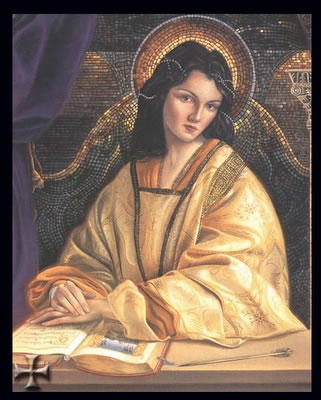
A little known fact about Anna Komnena is that she was awesome! Here she is reading a passage from the Book of Armaments. See that cross in the bottom left corner...have you looked at the top of the Holy Hand Grenade lately?

     Anna is one of the first female writers we know about. While her gender is why she gets the title Matriarch of History for this blog entry, the quality of her work is what earns her mention. She was trained in a good literary and historical background knowing the writers the Byzantines considered prominent. She was also very devoted to both of her parents and wanted to make sure their story was preserved for all time.

Anna gives an explanation for why she wrote this book saying:

" The tale of history forms a very strong bulwark against the stream of time, and to some extent checks its irresistible flow, and, of all things done in it, as many as history has taken over, it secures and binds together, and does not allow them to slip away into the abyss of oblivion".

     Anna says that the stream of time wipes away the accounts of men both great and average. That time is unstoppable and the deeds of the past all end up forgotten. However, history is the dam that protects knowledge. When we engage in history we honor those of the past who helped change their world. We honor the achievements of our ancestors and show that history does not have to repeat itself.  Even more importantly in my opinion is understanding. Not only can we prevent bad things from happening again and again, but at a deeper level we can learn who we are. Only through the lenses of how other people think and the stories that they tell can we learn to craft our own stories. What makes us different? What do we have to contribute to the world?

    There is a reason that many writers say that people who are avid readers make the best writers. This is because when we understand what makes us different, we can understand what we have to offer.

-Jason

Wednesday, February 27, 2013

Stories or Questions?

        One of the long standing questions man has always asked is " how do we teach the next generation?" The importance of education is just as relevant today as it was thousands of years ago at the dawning of civilization. That question is in fact one that both Homer and Plato have a great influence on.  During the days of Ancient Greece, Homer's The Illiad, was so popular many people say it was the single most important book to the Greek world.  This book is filled with the tales of the fall of Troy and the gods and heroes who were there to see it all happen. It is a story driven work, where lessons of warrior ethics, honor, tradition, respect of the gods, etc. are taught. On the other hand we have the works of Plato.  Plato advised his readers to not look to these stories that taught bad moral lessons, such as war is good, throwing a temper tantrum like Achilles is okay, and rampant promiscuity ( Zeus style) is not a problem. 

     The question is more complicated than just which one is right however.  While it is easy to agree that promoting temper tantrums and promiscuity are bad,  Plato's side of the argument goes on to encourage the scrapping of books like The Illiad altogether as books used in education.   If you ever read stories from the Bible you will find that often there are bad things that happen. The writer's however, do not cut these out, but leave them in as examples of how NOT to behave!

     If we look at style we see that Homer is a writer of epic poetry. Tales that tell a really good story with morals included. We learn from the facts presented and draw the pre-determined conclusions. This style is  bit different from Plato's however, as he uses the Socratic Method, named after his teacher, Socrates.  This method is all about asking the student questions and over a period of time challenging their very views by allowing them to reach conclusions on their own. A.k.a. not being directly told all of the answers.


While Greeks love their Plato and Homer, most Americans prefer Play-Doh and the philosophy of Homey the Clown. What "Homey don't play that!"

This leads us to the end of this entry. Should we teach in stories like the days of old, or should we guard what is taught, and teach the students to think Socratically?  Alternatively, maybe there is a middle of the road route.....What do you think?
     
-Jason

Saturday, February 16, 2013

How to Make a Good Story With Honey Part II

     A story by Xenophon. Xenophon, was an Athenian who lived right after the glory years of the "Golden Age of Athens." He was a friend and student of Socrates, noted for his generalship, horse-riding abilities and his works of history. While he was a soldier, he was part of a Greek mercenary band called, The Ten Thousand, who were hired to help a Persian prince named Cyrus the Younger (no relation to Cyrus the Great) over throw his brother's army and become king himself.  There was a great battle in modern day Iraq and Cyrus' forces, led by the Greeks won the day, but Cyrus was killed in the battle. With the mercenary pay master dead, the Greeks began a long march home that took them almost two years. This long and arduous journey is chronicled in Xenophon's book The Anabasis: The March of the Ten Thousand.

     The honey story occurs on this trip home in the modern day country of Turkey.   Here is Xenophon talking about what they found.

"Now for the most part there was nothing here which they really found strange; but the swarms of bees in the neighborhood were numerous, and the soldiers who ate of the honey all went off their heads, and suffered from vomiting and diarrhea, and not one of them could stand up, but those who had eaten a little were like people exceedingly drunk, while those who had eaten a great deal seemed like crazy, or even, in some cases, dying men.  So they lay there in great numbers as though the army had suffered a defeat, and great despondency prevailed. On the next day, however, no one had died, and at approximately the same hour as they had eaten the honey they began to come to their senses; and on the third or fourth day they got up, as if from a drugging".

     Apparently the soldiers had been poisoned by Grayanotoxins, a substance found in rhododendrons, azaleas and similar plants that do not bother the bees, but do bother humans. While they are not common, neither are they rare. The Black Sea area is probably one of the most well known areas where this is a problem and stories from the Greeks, Romans, and even much later are known to historians.  One such example comes from the late Roman Republic. There was a famous general known as Pompey, who led a Roman legion into a war versus a rival. This country was war-like, but far inferior to Rome and their king, Mithridates, knew it.  Mithridates kingdom was near the area where Xenophon's story had taken place and according to the story, Kateuas, one of Mithridates' advisers recalled the story of the Ten Thousand and convinced the king to retreat through this area, being careful not to eat the honey. This they did, but when Pompey and the Romans went through they decided to eat the honey and soon the whole army went into drunken convulsions.  While the Roman's lay paralyzed, Mithridates returned and massacred them.
It could be laced with poisonous honey!

     The last two posts have shown honey as medicine, as a metaphor, and as a poison.  However, honey is merely an example of how a writer can take the mundane and create rich patterns in their stories. It is fascinating to think that something as simple as this can be used in a multitude of ways to facilitate a better and more vibrant story arc....and let's be honest, isn't different and more creative what a writer should be striving after?

-Jason
  
picture source

Tuesday, February 12, 2013

How to Make a Good Story With Honey Part I

  You don't think of the ancient world when you think about honey, but maybe you would if you knew some of its better stories.  Practically all early cultures used honey, whether for eating or ritual ceremonies. The Egyptians, the Babylonians, the Greeks, and the Chinese all used this bee product quite liberally. Today, I would like to present a couple of accounts of honey in stories to show how something as mundane as this can be used to build up a good story.  First we will look at honey as a healing power and then we will look at honey as a metaphor.

     The Kalevala  by Elias Lonnrot, is considered by many as one of the greatest works of Finnish literature. It is a work of epic poetry composed in the the 1830's that tells of creation, magic and other things associated with Norse Epic Poetry.  One of the main figures in the poem is Wainamoinen, a hero figure who was probably a shaman. The following is a piece of the Kalevala dealing with honey.

There were nine diseases in Northland:
"Colic, Pleurisy and Fever,
Ulcer, Plague and dread Consumption,
Gout, Sterility and Cancer."
Wainamoinen, "the wise and wonderful enchanter", hastens to his people's rescue.
"Wainamoinen heats the bathrooms,
Heats the blocks of healing sandstone
With the magic wood of Northland
Gathered by the sacred river.
Then a honey heat he wakens,
Fills the rooms with healing vapors."
Then he prays to Ukko, the Great Spirit of Finland:
"On the heated blocks of sandstone
May the water turn to honey 
Laden with the balm of healing.
Send us mingled rain and honey,
Balsam from the great physician
To remove this plague of Northland."
The "eternal wise enchanter" then:
"Rubbed his sufferers with balsams
Rubbed the tissues, red and painful,
With the balm of healing flowers
Balsams made of herbs enchanted."
"The eternal wisdom singer
Thus expelled the nine diseases
Healed the tribes of Kalevala
Saved his people from destruction."

Here is a picture of Wainamoinen in despair because he was untimely born in the 1800's far too late for a good Norse Hero. Don't worry bud, you still get to save your people and dance in the rain that is mingled with honey!


     The poem above lets you see how honey is a primary emphasis of the  passage lending extra flavor to the text. That is the medicinal use, but let us now move on to the metaphor.

      The first Spanish Bible, published in 1569 is often called "The Bear Bible" because the image on the front is a bear reaching into a honey comb to get the sweet honey out. The image is a comparison of God's word being sweet like honey, encouraging the reader to reach in to pull out that sweetness.  That's number 2....a metaphor for digging deeper.  The thing that stands out in my mind is how multifaceted things we consider mundane can be when used properly.  The next entry, "How to Make a Good Story With Honey Part II" will be a Greek source that uses our favorite bee product in a third way.  Maybe the next time you get to write a story you can think of creative ways to use seemingly mundane topics to flavor your work.

-Jason

picture source

Saturday, February 9, 2013

The Venerable Bede

      There was a time when England was not called by that name. The people who inhabited that land were called the Britons and they had been part of the Roman Empire since the first century AD.  The problem came when Rome began to lose her grip on the empire.  Sometime around the year 410 Rome pulled all of her soldiers out of the island and despite the cries of protest from the Britons, that era was now over. The funny thing about leaving a large area completely unprotected is that other people decide to go there. Soon three groups of Germanic people (the Angles, the Saxons, and the Jutes) moved across the sea from Germany into Britain, bringing with them a culture we call Anglo-Saxon. Yes, the poor Jutes got snubbed.

    As civilization and writing began to dissipate across western Europe, there was one group who picked up the torch. This group was the Catholic Church; specifically the monastic communities of monks and nuns. Ireland and England became hot beds of learning within monasteries, and probably the prime example of an enlightened monk was the Venerable Bede. Some time around 731 A. D. Bede wrote the book The Ecclesiastical History of the English People which told the history of Britain from the invasion of Julius Caesar (54 B.C.) to his present day. This history was both political and religious, and is considered one of the finest historical works of the Middle Ages.  He is probably the most important source we have for early English history and so influences the way everyone thinks of the island.


Why did Bede leave us this large historical account? Let's look at his own words from the beginning of his book.
  
    "For if history records good things of good men, the thoughtful hearer is encouraged to imitate what is good; or if it records evil of wicked men, the good, religious reader or listener is encouraged to avoid all that is sinful and perverse, and to follow what he knows to be good and pleasing to God."

     The reason Bede is a Patriarch of Story is because his influence is so wide, but the reason he wrote to begin with is because he believed history taught us how to behave.  He was a moralist, a man who thought history should be taught because it is a series of lessons on how to live our lives. Something Plutarch,  a Roman writer was famous for in his biographies of famous Greeks and Romans (who will probably get his own blog entry at some point.)

Why do they call me Venerable you ask? Because it sounds awesome!

     Bede however, was not totally boring as you would expect something called The Ecclesiastical History of the....Zzzzzzzzzz! Here is my gem of interesting for you today.


"No reptiles are found there (in Ireland), and no snake can live there; for, though snakes are often carried there out of Britain, as soon as the ship comes near the shore, and the scent of the air reaches them, they die. On the contrary almost all things in the island are effective against poison."

Many people know the story of St. Patrick driving snakes out of Ireland,  but according to Bede the air is so good there they just kill over! Every good history book needs things magically dieing from potent smell!....And that's my message for you aspiring writers out there. Put more stench in your story!


-Jason

picture 1 source
picture 2 source

Monday, February 4, 2013

Sling For Your Supper

     One little mentioned aspect of the ancient world was a practice called slinging. The only story that I can even think of that most people would know is the story of David and Goliath. The shepherd boy versus the giant! Who will win? Well we know David chose his five stones and one of them found Goliath's head. However, is slinging just a shepherd weapon? A weapon archaic even for that period of time? If we are to properly explore slinging we must travel to the other side of the Mediterranean Sea to a little group of islands south of Spain called the Balearic Islands.

      The first large outside power to interact with the Balearic Islands was Phoenicia, the early sea-faring traders of the Mediterranean, inner sea world. Thus it comes as no surprise that when the Carthaginians (who were the successors of Phoenicia) went to war with Rome during the Punic Wars we would see the Balearic Slingers in the Carthaginian armies. 

     Strabo, a Greek geographer, who lived in the Roman Empire during the time of Emperor Augustus writes a little about them. "They went into battle ungirt, with only a small buckler, and a javelin burnt at the end, and in some cases tipped with a small iron point; but their effective weapons were their slings, of which each man carried three, wound round his head".

     Now some accounts have the three slings more evenly dispersed such as: one around the head, one around the body and one around the arm.  These slings would have been different sizes and used to launch stones to a large variety of distances.  Probably not the most stylish of outfits to say the least. Diadorus Sicilus, a Roman historian, tells us another great Balearic Islands story. He says that when a boy was old enough to use a sling, (think probably in the neighborhood of 5) his mother would take his food and place it on top of a pole high enough so the boy could not reach it. Then the boy would have to learn how to knock it off with  a sling if he wanted to eat. Tough love or way to cool of a story to be true? Isn't that always the question when it comes to history? When something is that cool, how can it be true? Well, the short answer is we can't know, but remember this is the ancient world where Spartans left their unwanted babies out in the cold, Carthaginians sacrificed their children to Baal, and being a soldier was a way of life for most men in most societies.  Okay I feel better now that I have had that tangent. Lets go back to the rocks.

     While stones were very effective, capable of bashing shields and helmets in; what was even more effective was lead bullets. Certain groups would use these chunks of lead in their slings to achieve even further reach than a bow would shoot, and reaching speeds of  around 60 miles an hour. While that is fascinating; maybe the most interesting thing about these bullets for modern people however, was the graffiti. Phrases like "Take that!" "This is Yours!" "Pain!" and references to impregnation and sexual innuendos have all been found written on these stones. Why kill a guy with a rock when you can kill him AND taunt his friend?

-Jason
I'm thinking my rock will say this. How about you? Time to think up your first Balearic Rock Taunt!  

picture source

Friday, February 1, 2013

Wouldn't You Like to Find Atlantis?

     When most people think of Plato they think philosophy. Maybe they think of his book The Republic or they think of him starting the Academy of Athens.  He was a brilliant intellect, a student of Socrates, and later a mentor to Aristotle. This guy had one nice pedigree! By the time of Plato, Athens was the intellectual capital of Greece if not the whole  Mediterranean world. How many other writers can claim the distinction of having multiple schools of thought named after him? ( Platonists, Middle-Platonists, and Neo-Platonists) Notice that I never said you have to be good at naming things to be a philosopher.  Yet despite these over-flowing accolades, there is still a group of people who are driven crazy by Plato....the archaeologists.

    You see, Plato was also the guy who first started talking about this "totally real place"  called Atlantis.  The thing is, while most people consider Atlantis to never have existed there is always that chance that it is true. If you are an archaeologist exploring the bottom of the ocean for instance, how could you not hope that you find something that says "Atlantis" on it?  The idea of finding a place that was previously considered mythological is the pipe dream of the archaeologist, historian, explorer etc. It really got started when Henrich Schliemann read Homer's The Illiad and decided that even though people thought Troy was not a real place, he was going to go find it. It turns out he did just that, and so the precedent was set. As another example, archaeologists have found ruins of the Hittite civilization that previously had only been mentioned in the Bible,once again showing the possibility of finding places we like to call "mythological."
The people of Atlantis always wondered what the dolphins were trying to tell them right before Atlantis went underwater, but it wasn't until a brilliant twentieth century writer named Douglas Adams that we figured out they were saying "So long and thanks for all of the fish!"

     It turns out that while Plato had a huge impact on the Ancient and Medieval worlds' thoughts and philosophies, it seems his biggest contribution to our society is to our sense of adventure, our sense of treasure hunting, and most importantly to our vocabulary.   After all,  how many words evoke as many images in our minds as "Atlantis?"

-Jason

picture source

Tuesday, January 29, 2013

Was the Apostle Paul a Fan of Greek Poetry?

     When the Apostle Paul went out on his Second Missionary Journey the Lord brought him to Macedonia and to Greece.  While he was in Greece, he even went to Athens where he gave a famous speech that we call "The Men of Athens Speech" to the leaders of the city.  Paul begins by commenting on just how religious the people of Athens are and then he proceeds to talk about a strange altar he found.

   "For while I was passing through and examining the objects of your worship, I also found an altar with this inscription, 'TO AN UNKNOWN GOD' therefore what you worship in ignorance, this I proclaim to you." -Acts 17:23

     What Paul was doing in this speech was reaching back into the minds of his audience. The biographer Plutarch tells a story about a man from Crete called Epimenides, who in his day was considered a writer and a prophet.  According to the story, one of the leading families of Athens had fallen foul of the gods and so the gods had punished the entire city of Athens with a plague. The Athenians did everything in their power to placate all of the diverse gods in their pantheon, but nothing seemed to work. Finally they called in Epimenides to help them.  The prophet told them that they had actually angered a god whom they did not know and they should build this "unknown god" an altar and ask for his forgiveness. This the Athenians did and soon the plague ended. 

This was the story in the back of the minds of the Athenian leaders who heard Paul talk this way. Not long before this they were calling him an idle babbler and some one who was teaching strange deities, but suddenly he had just quoted from a story that was 100% Greek. Now the game had changed. Paul however, did not stop there. 

   "For in Him we live and move and exist, as even some of your own poets have said, ‘For we also are His children'." -Acts 17:28

    Soon after his Epimenides reference he begins directly quoting the prophet. "For in him we live and move and exist" is straight out of his poem called Cretica. Apparently Paul had decided to go big or go home, and so he then quotes another Greek writer named Aratus.

 "For we also are His children" is from Aratus' poem called Phaenomena. A poem about constellations and weather. The beginning of this poem talks about how we are all God's children in a very Stoic philosophy style.  Now we begin to see an apostle who not only knows Jewish law, but also can talk Greek history and philosophy with the best philosophers in Athens. What is the point of this story? When you know the world view and the stories your audience tells themselves you can walk right in the front door! When you know the jargon, you have removed one of the biggest barriers to whatever point you are making, selling etc. There are tons of reasons you can fail at things, don't let your lack of homework be one of them!
Greek Poetry! A great read to bring with you on your next missionary journey!

-Jason

picture source

Sunday, January 27, 2013

William Golding Enjoys a Good Joke!

     Some of you may be familiar with the name William Golding. Some of you however, may be more aware of his best selling work entitled The Lord of the Flies.  Back in Old Testament times there was a famous group of gods called the Baals. These Baals were Canaanite gods, whose name literally translated into lord.There were also different Baals for different cities and  one particular town was called Zebul. The god of Zebul was naturally called Baal Zebul (alternatively spelled Bel Zebul) and the Hebrews who lived in the area began mocking him and calling him Bel Zebub, which means the Lord of the Flies.

    So it appears Mr. Golding had found himself enjoying a good Hebrew joke and voila!... the book title is born! Had Golding not known a little bit of Jewish history he may have come up with something much less catchy and perhaps we would have never heard of his book.

If you ever find yourself stranded on an island like in Lord of the Flies,  remember it could be worse.  Actually, no...that is pretty horrible!


-Jason

picture source

Friday, January 25, 2013

Glycon the Snake God Puppet

     During the second century AD there was a Roman writer named Lucian of Samosata.  Lucian was mostly noted for his satires that he wrote, but he has one particular story he tells that is very interesting.  Sometime during that second century in Asia Minor (the Roman name for Turkey) there lived a man named Alexander of Abonutichus.  Now the people of this time often associated snakes with the god Asclepius  and so Alexander told them that Aesclepius was about to return as a new incarnation.  Then one day Alexander gathered the people of his village in the marketplace and pulled out a goose egg. He then split the egg open and out came a small serpent. He took it home and supposedly within one week it had grown  to the size of a man. Even stranger was that its face appeared to look like a man with long blond hair.  According to Lucian, Alexander was using a trained snake with a puppet head to create "Glycon" the snake god.

      Despite how weird and ridiculous this sounds the cult became very large in Asia Minor and Roman governors and even the Roman Emperor Marcus Aurelius payed homage to the god, who became known for protecting his followers from plagues.  Alexander of Abonutichus so changed the world he lived in that even the village he was from became an important town called Ionopolis. This snake cult lasted well over a hundred years and statutes and coins were dedicated to Glycon.  While I am not advocating deception or starting your own cult, it just goes to show you that those who speak their mind, are the ones that change things.

Hello children, Big Bird couldn't be here this week, but don't worry my name is Glycon the Plague Stopper!


-Jason

picture source

Wednesday, January 23, 2013

The Monstrous Boar Hunt (Patriarchs of Story Pt 2)

     A long time ago in what we now call Turkey, there lived a wealthy and powerful king. This king was named Croesus, and he ruled a kingdom called Lydia.  Croesus was famous for his wealth and was known far and wide for it. He was so rich he thought that he was the happiest of men, and according to Herodotus this hubris (or arrogance) upset the gods to the point they decided to punish him. This is the story of Croesus' punishment.

    Croesus had a son named Atys, who was a very capable man. He fought in the army, and generally succeeded at whatever he decided to do. One day Croesus had a dream where Atys was wounded by an iron spear and shortly afterwards died. When the king awoke he immediately went about removing the iron spears from the palace, began taking away dangerous assignments from Atys and began looking for him a wife so he could settle down into a nice peaceful life.  All of this Croesus did with almost no problem and soon things were going well.

     A little while after Atys' wedding day, there came  a man named Adrastos, who had been banished from his home by his family after he accidentally killed his brother. Croesus however, knew his family and accepted him into his palace and placed him in high respect.

     Now let us listen to the words of Herodotus.  "And so Adrastos lived for some time at the court of Croesus. Meanwhile a monster of a boar appeared on Mt Olympus in Mysia (in northern Turkey) from which it would set out to ravage the fields of the people of Mysia. The people of Mysia went out to attack it, but could do it no harm and they suffered injuries from it instead."  So the people of Mysia sent a message to king Croesus begging him to send his son and a group of soldiers to help kill the monster of a boar. The king vehemently refused to send his son, but agreed to send soldiers and all was set to go off without a hitch, when Atys came to see his father.

     Atys accused his father of keeping him away from his former status as a good warrior. He said he could not handle being mocked by the people, and his wife was beginning to think he was a coward. The king now had to explain to his son the truth and he told him of his dream and how he would die of an iron spear and the king's great fear for his son.

    Atys replied " You said that in your dream I appeared to die by an iron spear. Well, what kind of hands does a boar have? Or what kind of spear could it use that you are so afraid?"

A boar with a spear? Did that guy just create a Ninja Turtles bad guy two millennium before the show came out?


     Seeing the reasoning of his son, the king agreed and also sent Adrastos, who was now indebted to the king because of his taking him in.  He solemnly vowed Adrastos to protect his son from any harm. Soon the party was off and they went to the mountain, found the boar and surrounded him. The party began throwing javelins at the boar and before the combat was done Adrastos' spear had found Atys and gave him a mortal blow.  The man sworn to protect him seemed to have permanent bad luck.  The party suceeded in killing the boar and they all returned home but with a heavy heart. Fortunately the king accepted Adrastos' apology, but still I wouldn't say the story ended happily.   Thus ends the Monstrous Boar Hunt by Herodotus...one fine story!

-Jason

picture source

Monday, January 21, 2013

The Macedonians and the Whale (Patriarchs of Story Pt1)

      When Alexander the Great was out conquering the world, he came into contact with the Indian Ocean, this massive expanse that was virtually unknown to the Macedonians.  Alexander commissioned his naval commander, Nearchus to sail out into the ocean and begin exploring.  The primary writer we have for this story is Arrian, a Roman writer, so lets see what he says.

     "Large whales live in the outer ocean, and fishes much larger than those in our inland sea. Nearchus states that when they left Cyiza (the port), about daybreak they saw water being blown upwards from the sea as it might be shot upwards by the force of a waterspout. They were astonished, and asked the pilots of the convoy what it might be and how it was caused; they replied that these were whales that rove about the ocean spouting up the water to a great height."

     These whales so startled the crew because of their size and ability to shoot out water, that Nearchus had to cheer his men up and encourage them to even keep going.  Having achieved this, he decided to  have the ships give battle to the whales. They turned towards them as if they were going to ram the nearest whale and sped towards him blowing on their bugles and shouting with all their might.  This naturally frightened the whale and he dived under the water.

Back to Arrian  " Thereupon joyful applause welcomed this unexpected salvation, and much praise was showered on Nearchus for his courage and prudence."

But wait!  Oh no! Watch out Nearchus the whales are behind us now! How did they do that? Oh no! Run!


Surprise! Whales are Ninjas!


This ends the tale of the Macedonians and the Whale. As you can see stories like this are ripe for fiction writing. Plot twists and awesome literary encounters are yours for the taking.  A big thank you to Arrian for being a  Patriarch of Story.

picture source